


EUR
125,00 Excl. VAT
*
EUR
148,75 VAT included
*
sold out


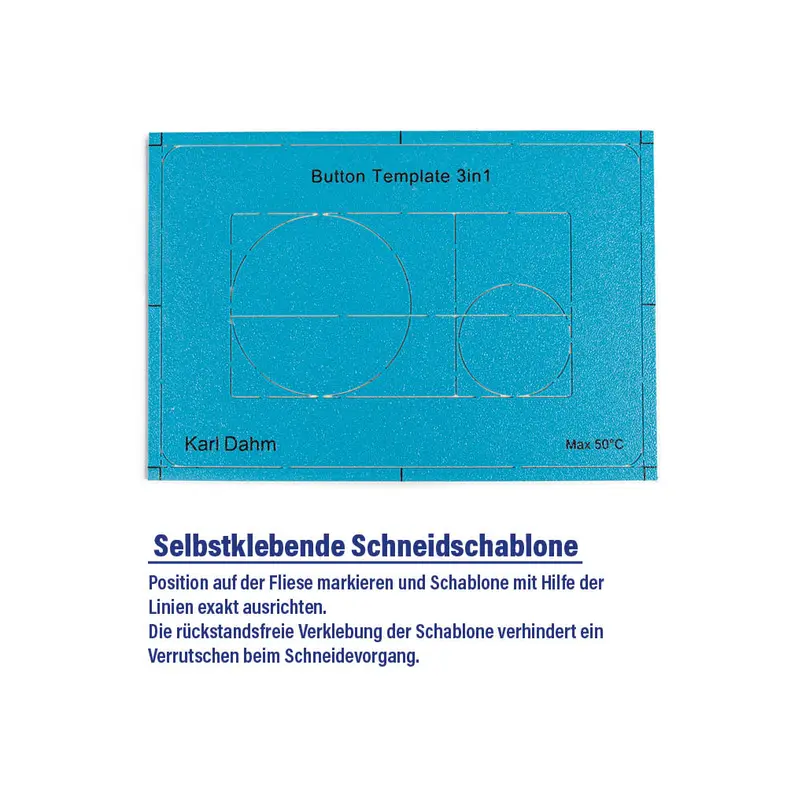
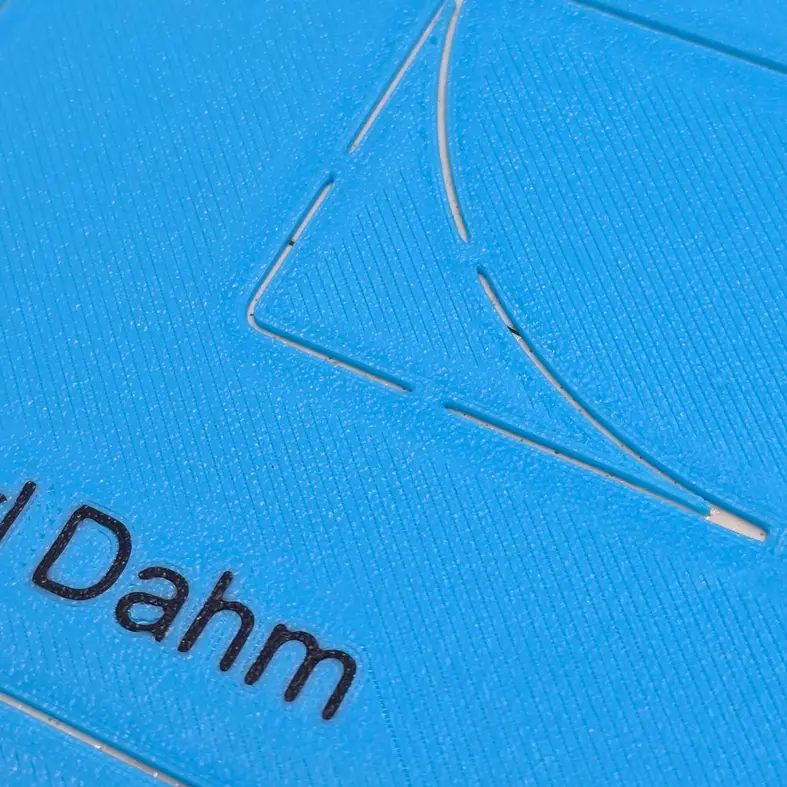
With tileable WC flush plates, the tile cut determines the overall result: even minor deviations can lead to visible joint gaps, unclean edges or an actuator plate that does not sit flush. The Royal Flush template for tileable flush plates supports tilers with the precise positioning, marking and processing of the tile – suitable for our Royal Flush series.
The Royal Flush template specifies the contour of the actuator plate and makes accurate alignment on the tiled surface easier. This allows cut edges to be produced in a more controlled way and the subsequent flush plate to be integrated flush into the tile pattern.
Before cutting, the position of the flush plate should be transferred precisely to the cladding and then to the tile. We recommend using a laser measuring device for this.
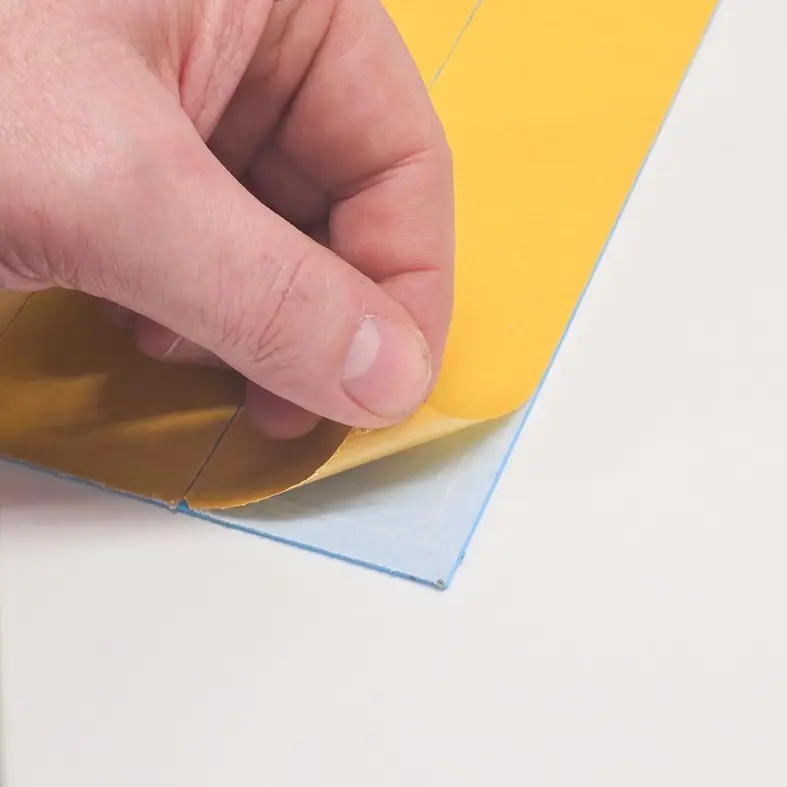
The template must sit cleanly and without tension on the tile surface. Dust or adhesive residues can impair adhesion.
Do not tilt the tool when cutting. After cutting, the cut edges should be carefully deburred, sanded and cleaned.
The Royal Flush template is designed for the installation of tileable flush plates from the Royal Flush series. Depending on the model, the plates are supplied with magnets, holders and flushing rods.
Depending on the set, it is used with variants such as Royal Flush Universal or Blue Base. Before installation, it should always be checked whether the template, flush plate and cistern model are compatible.
The decisive factor is not the template alone, but the appropriate diamond tooling for the cut. With hard materials, work should be carried out with low vibration and clean guidance.
Many cut-outs can be produced dry using suitable diamond tools, provided dust extraction and PPE are used. For sensitive materials, wet processing can help reduce heat build-up and chipping.
Mineral dust is produced especially during dry processing and should not be inhaled. Dust extraction or low-dust working methods are strongly recommended on the job site.
Guide lines on the template support precise alignment. For large-format tiles, a cross line laser is useful so that the actuator plate later sits neatly within the joint pattern.
It is important not to sand the edge too aggressively so that the contour remains dimensionally accurate. If visible chips occur on glazed tiles, the tile should be cut again.
Self-adhesive cutting templates are usually designed for clean, precise use. As soon as markings are damaged or edges are deformed, the template should no longer be used.
For Royal Flush products, diamond milling pins and mini cutting discs are among the suitable accessories. The selection should always be adapted to the tile thickness, material hardness and required edge quality.
This is the only way to ensure that the template adheres reliably and stays in position during marking or cutting. Careful cleaning is particularly important on polished or textured surfaces.
Excessive pressure leads to heat, edge breakage and faster wear. With hard tiles, tools should be regularly dressed and not overloaded.


