
New

EUR
6,10 Excl. VAT
*
EUR
7,26 VAT included
*
In Stock


 Filter


The wedge leveling system is one of the most proven solutions for precise installation of tiles and slabs – whether indoors or outdoors. Anyone who regularly works with large formats, delicate porcelain stoneware, or uneven substrates knows: only a clean grout pattern and a perfectly level surface deliver a professional result. This is exactly where clips and wedges for the wedge leveling system from Karl Dahm come into play. They ensure consistent height alignment, stable hold during curing, and an excellent overall finish – with minimal rework required.
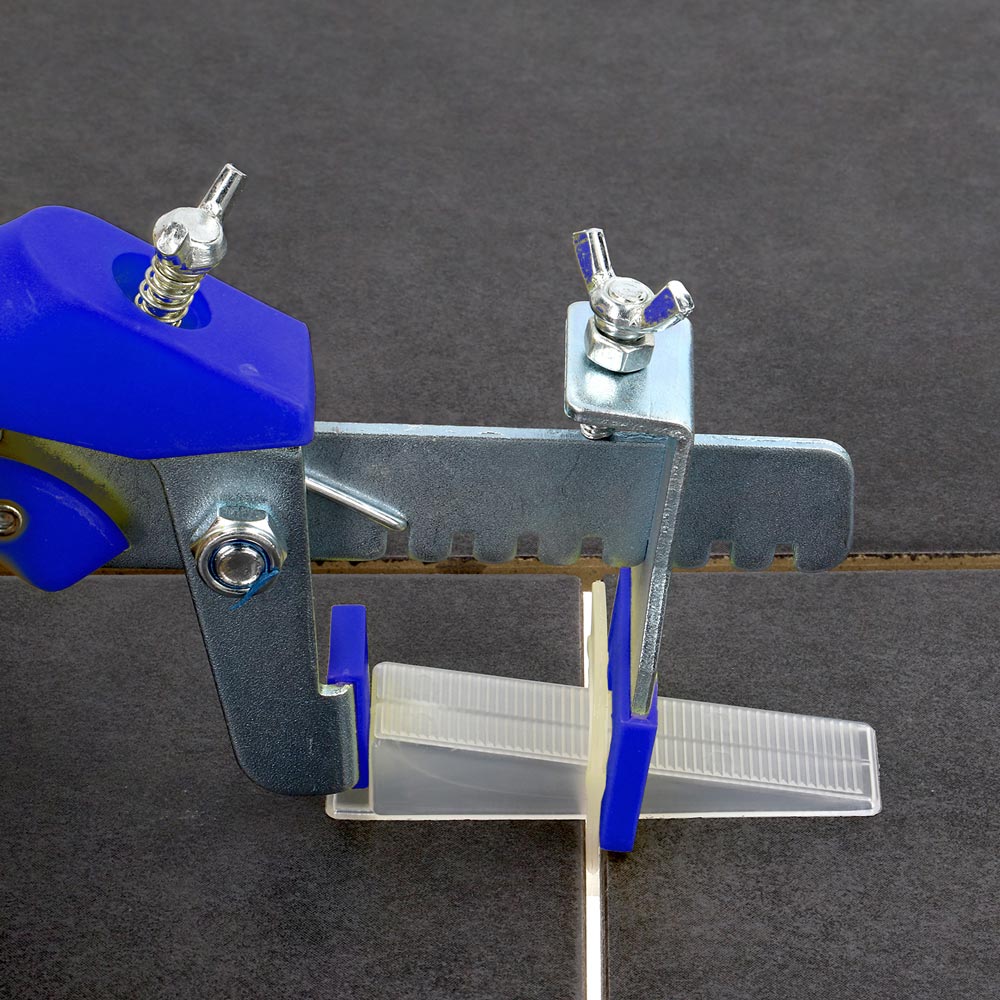
The principle is simple but effective: clips define the joint, wedges press the tiles level, and a pliers is used to secure the wedge evenly. The components work together optimally and reliably prevent lippage. Especially under challenging installation conditions – e.g., on old screeds, with heavy natural stone, or in wet rooms – wedges and clips are the best helpers for a flat surface.
At Karl Dahm you will find wedges and clips in different versions, suitable for a wide range of tile thicknesses and joint widths. This means you are perfectly equipped for any installation situation.
For different tile thicknesses and joint widths, Karl Dahm offers suitable clips:
The wedges are also designed for durability and reusability:
To press the wedges correctly into the clips, a suitable leveling pliers is required. Here you can choose between a lightweight plastic pliers and a particularly robust metal version – depending on how often you use it and your personal preference.
Tip: For beginners, complete sets with wedges, clips, and pliers are especially recommended. Professionals, on the other hand, often add individual components specifically to replenish or customize their stock.

The number of clips required per square meter depends directly on the tile format. For a standard size such as 60×30 cm, a consumption of around 22 clips per m² has proven effective. If larger formats such as 60×60 cm, 80×80 cm, or 120×60 cm are installed, the number decreases accordingly because the tile areas are larger and fewer clips are needed for fixation. To plan materials optimally and avoid shortages on site, using a clip calculator is recommended. It takes the exact format into account and provides a precise quantity recommendation for your project. This ensures perfect flatness without lippage.
Wedges in a tile leveling system are durable components and are therefore ideal for repeated use. Unlike the clips, which break off after the tile adhesive cures and are disposed of, the wedges remain completely intact. After finishing the installation work, you can simply collect the wedges and – if necessary – clean them lightly. This significantly reduces material costs for future projects and also helps reduce waste. Especially for larger construction projects or repeated installation work, reusing wedges is clearly worthwhile.
Clips are available in different variants so they can be precisely matched to the specific tile project. The most important differences are the planned joint width (e.g., 1 mm, 2 mm, 3 mm) and the suitable tile thickness. Standard clips are generally suitable for tiles with a thickness of 5 to 12 mm. For particularly thick natural stone or porcelain slabs from 12 mm, so-called “high clips” are necessary. They ensure that the leveling system can build up enough pressure to align all tiles perfectly flush. Choosing the right one prevents edge offset and ensures a perfect, level final result.
Choosing the right tensioning pliers depends on how often and how intensively you install tiles. Plastic pliers are light, handy, and ideal for occasional private use. They provide enough force to clamp wedges securely into the clips. Metal pliers, on the other hand, are significantly more stable, durable, and allow more precise force control. They are especially recommended when large-format tiles or natural stone are installed regularly. The sturdier construction ensures precise work and consistent tension – an advantage, especially on larger areas.
The clip-and-wedge system from Karl Dahm is modular. This means that regardless of joint width, tile thickness, or project size, you can always use the same wedges. The clips can be changed as needed – e.g., if you want to install a finer joint or thicker tiles. This system compatibility reduces tool and storage effort and makes work much easier. You simply choose the appropriate clip variant; the wedges always remain the same.
If a spot was overlooked during installation or a clip was damaged, you don’t have to reopen everything or remove tiles. SOS clips allow subsequent installation directly into the existing joint. They are simply slid in and tensioned with a wedge as usual. This makes it possible to quickly and precisely compensate height differences even afterwards. This flexibility is a major advantage, especially with large formats or long runs of tiles.
Clips are disposable components of the leveling system because they are removed at the break point after installation. They are made of plastic and should be disposed of accordingly with construction waste. The wedges, however, remain undamaged and can easily be reused. Reusing wedges not only reduces waste but also lowers costs for future tiling projects. Sensible and sustainable handling of materials pays off, especially for larger construction projects.
For trendy, minimalist tile looks with very narrow joints, there are clips with an extremely slim joint guide of just 1 mm. This variant ensures that even with small joint widths, exact height compensation and a perfectly level surface are achieved. Especially with premium porcelain stoneware, design tiles, or large-format slabs, this creates a high-end, calm joint appearance – without compromising precision.
In addition to clips and wedges, there are useful accessories that make the work much easier and improve the tiling result. Tensioning pliers (plastic or metal) make clamping the wedges easier. Tile lifters help to position heavy or large tiles precisely. Adhesive remover ensures clean, residue-free joint areas. SOS clips are ideal for subsequent corrections. With the right accessories, tile installation becomes not only easier, but also faster, more precise, and cleaner.